

Red Flags: How to Spot a Dodgy Visa Agent Before You Hand Over a Peso or Dollar
How to spot a bad Migration Agent
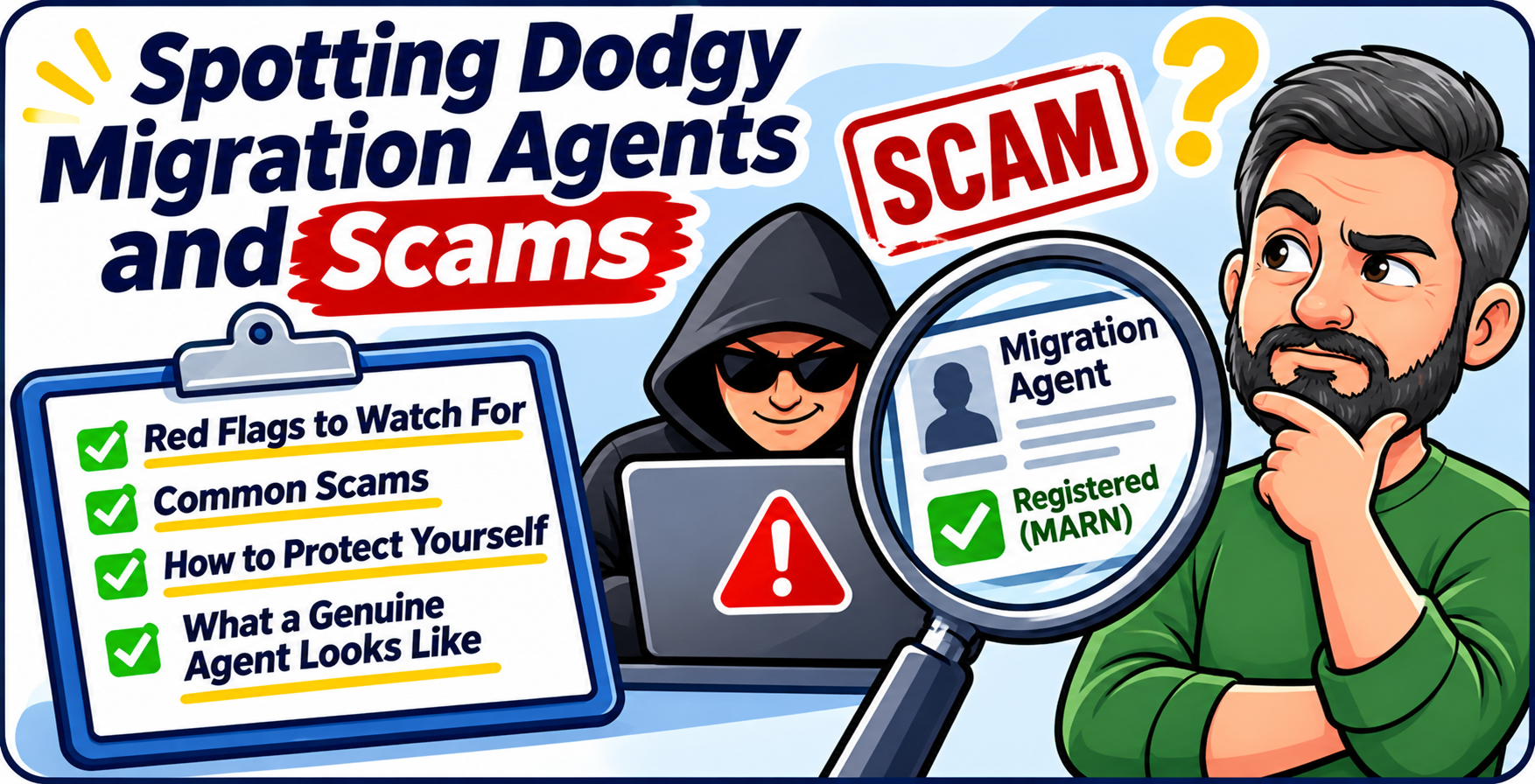
Question: How to avoid scams from visa agents?
Answer: Only deal with a Registered Migration Agent, and verify the registration yourself before you pay anything. Search the agent’s MARN on the public MARA register, make sure the name and current status match the person you’re talking to, and get a written costs agreement that splits the Government visa charge from the agent’s fee. Pay only into a business account in the agent’s business name, and keep every receipt. Walk away from anyone who guarantees approval, claims to have a contact inside Home Affairs, suggests faking evidence, or asks you to pay a personal account or e-wallet. No one can promise a visa, and a real agent will tell you that on the first day.
Let me say something that might make me unpopular with a few people in my own industry. The Philippines has more than its fair share of people who will happily take your money and give you nothing back for it. Scamming happens a lot!
Australian men fall in love with Filipinas, and those men want their sweethearts home with them in Australia as fast as possible. Scammers know that. They know you’re emotional, they know you don’t understand the system, and they know you’ll pay almost anything to be together. So they set up a Facebook page, borrow a few photos, and wait for you to message them.
I’ve been doing this for many years. Here is what to look for, and where to check it yourself rather than taking my word for it.
1. They won’t give you a MARN, or it doesn’t check out
Under Australian law, immigration assistance is meant to come from a Registered Migration Agent or an Australian legal practitioner. Every registered agent has a MARN, a Migration Agents Registration Number. Mine is 0959797, and it’s on everything I publish.
Don’t just accept the number. Go to the Office of the Migration Agents Registration Authority (MARA) website and search the public register. Check the name matches the person you’re dealing with. Check the registration is current. Check whether they’ve been sanctioned or cautioned.
If someone says “I have a licence” without a number, walk away. If they say registration “isn’t needed in the Philippines”, walk away even faster. Australian visas are Australian law, and it doesn’t stop at Ninoy Aquino airport.
2. They guarantee approval
Nobody can guarantee a visa. Not me, not the best lawyer in Sydney, not anybody. The decision belongs to the Department of Home Affairs, and a case officer will look at your evidence and make the decision.
What I can do is tell you honestly whether your case looks strong, where it’s weak, and what we can do about the weak parts. That’s the job. Anyone who says “100% approved” or “we have a contact inside Immigration” is lying to you, and that second one is also describing a crime. And for the record? I have never heard of a "contact" in the Department doing anything corrupt!
The Code of Conduct that registered agents must follow requires us to be honest with clients. A guaranteed outcome is not honest.
3. They want you to fake your relationship evidence
Some “agents” will happily suggest you stage photos, invent a timeline, or backdate things to make the relationship look stronger. This is the worst advice you can get.
The Department checks. Providing false or misleading information can get your application refused, and it can also leave you with a ban on future applications. I’ve seen real couples with genuine relationships wreck their own chances because a “helpful” agent told them to pad the file.
If your relationship is genuine, we prove it with genuine evidence. If it’s thin, we say so up front and talk about what to do next.
4. The money looks wrong
Most agents, myself included, may collect the Government’s visa application charge from you along with our professional fees. That money goes into the business client account, and we pay the Department on your behalf. Otherwise we direct the client how to pay it to the Department directly by BPay. That’s normal, and there are rules about how an agent has to handle it. The Code of Conduct sets out how client money is held and accounted for.
So the question to ask isn’t “who pays the Department?” It’s “where is my money going, and can you show me what it was for?”
A legitimate agent:
- Gives you a written costs agreement before you pay anything
- Separates the Government charge from the professional fee, so you can see exactly what each one is
- Takes payment into a business account in the name of the business, not a personal GCash, a personal bank account, or someone’s cousin’s e-wallet
- Gives you a receipt every time
- Shows you proof the application was lodged and the charge paid, when you ask
Be worried if you see any of this:
- Payment requested to a personal account with no business name attached
- No written agreement, or one that doesn’t say what you’re paying for
- No receipts, or receipts that don’t match what you sent
- Fees that keep appearing (“urgent processing”, “priority fee”, “embassy fee”) that nobody can explain
- Pressure to pay today or lose your “slot”
- Cash handed over in a mall or coffee shop with nothing in writing
- Vague answers when you ask how much of your payment is the Government charge and how much is the agent’s fee
If you can’t get a straight answer on price, you won’t get a straight answer on anything else.
5. You can’t see your own application
You should always know what’s been lodged in your name. If your agent refuses to tell you whether an application has been lodged, won’t show you the documents, or says you’re “not allowed” to see your own file, something is wrong.
You can also check where you stand with Home Affairs directly. Visa holders can check their own visa status online using VEVO. If the story you’re getting from your agent doesn’t match what the Department’s own system shows, ask questions immediately.
6. They’re a ghost
A real business has a real address, real people, and a phone that gets answered. If all you can find is a Facebook page with no staff names, no office and no track record, think hard.
Look up the people. Ask for the name of the registered agent who’ll actually handle your case. Ask where their office is. And be wary of anyone who pushes you to chat only on private messaging, then goes silent after payment.
7. They’re selling something other than a visa
I get a steady stream of people who’ve been offered “sponsored jobs”, visas for sale, or a “sponsor” who’ll marry for a fee. Don’t touch any of it. Australia doesn’t sell visas. Anyone who tells you otherwise is either scamming you or setting you up to commit fraud, and you’ll be the one who pays for it.
What to do if you’ve already been caught
First, stop paying. Don’t send “just one more fee” to get your money back, because that’s the oldest trick there is.
Keep every message, receipt and screenshot. Then report it. MARA takes complaints about registered agents, and about people operating without registration. Home Affairs has a way to report immigration fraud. And because the money probably moved through the Philippines, report it to the PNP Anti-Cybercrime Group or the NBI Cybercrime Division as well.
You might feel embarrassed. Don’t. These people are professionals, and plenty of smart, careful people have been taken by them.
Check me, too
I’d rather you checked me and found everything in order than took my word for it. Look up MARN 0959797 on the MARA register. Read the Home Affairs information on visa fees and scams. Read the reviews.
If I’m the right agent for your case, you’ll still be here after you’ve done that. If I’m not, you’ll have lost nothing, and you’ll know exactly what to look for in whoever you choose instead.
Your visa is one of the biggest decisions you’ll make, so choose your agent like it matters.
Jeff Harvie, RMA (MARN 0959797) • www.downundervisa.com