

Jeff and Mila Harvie. Our story and the story of Down Under Visa.
Our Story and the Story of Down Under Visa
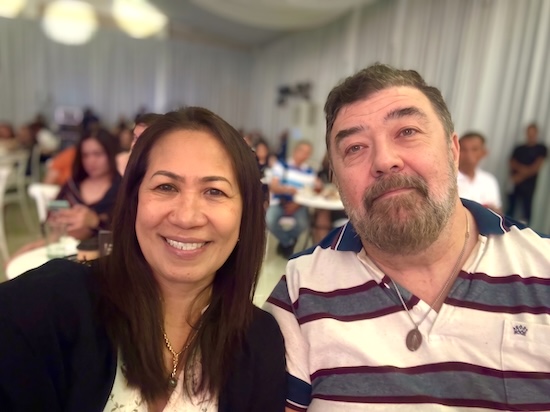
Australian sponsor and Filipina wife. We went through the partner visa process
ourselves. We know what you're going through — because we lived it.
Although you should take the time to read this. It's a good story!

Founded by Australian Registered Migration Agent Jeff Harvie and his Filipina wife Mila, Down Under Visa provides dedicated partner visa guidance rooted in their own personal journey from long-distance courtship to marriage. By combining real-world cross-cultural understanding with regulated migration expertise, they protect Australian-Filipina couples from costly application errors and bureaucratic separation to bring them safely home to Australia.
I am Jeff Harvie. If you had told me thirty years ago, when I was sweating through my work shirts in the Central Queensland dirt, calculating fertiliser ratios and arguing with stubborn smallcrop growers, that my middle and later years would be spent running a bustling family and migration practice in the Philippines, I would have told you that you had been out in the sun without a broad-brimmed hat.
Life rarely moves along the straight, well-graded bitumen road we envision when we are twenty-one. It takes hairpin turns. It sends you through corrugated dirt tracks, washes out the bridges you thought were permanent, and occasionally drops you right into the middle of an entirely different country.
Today, as an educated Australian man in my early sixties, looking out over our home and office with a clear head, a quick tongue, and an immense well of gratitude, I can see every single stitch in the tapestry. The heartbreaks, the bureaucratic nightmares, the wild leaps of faith across oceans, and the countless small victories all had a purpose. They brought Mila and me together, they shaped our family, and they laid the bedrock of what Down Under Visa has become: not merely a Migration Agency practice, but an absolute sanctuary for Australian-Filipina couples who simply want to spend the rest of their days together without fear.
To understand why we guard our clients’ futures so fiercely, you have to understand where we started. You have to know what it is like to stare down a government department, empty-handed and terrified, with the love of your life hanging in the balance.
Part I: The Dust, the Separation, and the Lightbulb
The year was 1996. Like far too many Australian men of my generation, I found myself separated and facing the cold reality of divorce. I was in my early thirties, carrying the heavy, disorienting quiet of an empty house.
I was working at the time as an Agricultural Consultant across Queensland, dealing largely with horticultural and smallcrop growers. It was honest, demanding work that required a sharp eye for detail, a deep understanding of practical science, and a great deal of patience when listening to men who were battling drought, markets, and weeds. But when you knock off for the day and the ute engine ticks cold in the driveway, an empty house is just an empty house.
I spent several years doing what most divorced men in Australia do: I dipped my toes back into the local dating waters. It was a thoroughly dispiriting exercise. The cynicism, the modern games, the unspoken emotional baggage, and the sheer lack of domestic harmony made me wonder if companionship was simply something you endured rather than enjoyed. I have always been a traditional man at heart. I never had a “casual pick-up” in my life. I married young because I believed, as a wise Father once wrote thousands of years ago (in the Beginning), that it is not good for man to be alone. Few truer words have ever been spoken. Left to his own devices, a solitary man tends to look like nobody owns him: a bit scruffy around the collar, underweight or carrying bad weight, eating out of tins, and drifting without an anchor.
Then came the turning point. It wasn't an epiphany out of a book; it was a simple visit to an Australian mate’s home.
He was married to a Filipina lady. I walked through their front door, and the contrast to the modern domestic environments I had grown accustomed to knocked the wind out of me. The home was impeccably clean, filled with light, calm, and good humour. Out in the backyard, neat rows of leafy greens and fresh vegetables were flourishing in the soil. Sitting at the table was their young child: bright-eyed, well-fed, spotless, and possessing manners that would shame a diplomat.
And then there was his wife. She was striking, certainly, but it was her character that stopped me in my tracks. She was extraordinarily polite, welcoming, soft-spoken yet thoroughly dignified, and radiating a calm, maternal competence. There was no posturing, no underlying resentment, and no domestic friction humming beneath the surface. They were a genuine team, working toward a shared life with mutual respect.
The penny did not just drop; it hit the floor like an anvil.
I looked at my mate, then looked at his family, and thought: This man has uncovered something profound that the rest of modern society has completely forgotten.
Part II: The Early Web and the Manila Learning Curve
That was in 1998. The world wide web was in its infancy. There were no social media platforms, no algorithmic video feeds, and no digital groups where thousands of armchair experts dispense dreadful advice behind anonymous profiles. Instead, there were slow-loading message boards and primitive websites run by smooth operators peddling a singular, dangerous myth: that every single woman across the seven thousand islands of the Philippines was an angelic, submissive creature waiting by the shore to become the adoring, effortless bride of any Australian who bought a plane ticket.
I spent months reading, corresponding, and trying to make sense of this foreign world. In 1999, I packed my bag and took my maiden trip to Manila.
Reality, as it always does, provided an immediate cold shower. My initial encounters were sobering. I met one lady; it was an outright disaster from the start, but I was a slow learner! I met another; it was an impending disaster, a clash of expectations and values that collapsed before it began. I stepped back, dusted myself off, tried again. This time it was different!
Those early trips taught me a priceless lesson that I still drum into every Australian sponsor who walks through our doors: “All Filipinas make perfect wives” is total nonsense.
Human nature does not stop at the equator. The Philippines has its share of opportunists, princesses, and incompatible souls, just like Brisbane, Sydney, or Melbourne. But what I also discovered, beyond the initial romantic blunders, was a deep, abiding affection for the country itself. I fell in love with the unpretentious warmth of the everyday people, the laughter echoing through crowded jeepneys, the resilience of families who had almost nothing yet shared everything, and the enduring respect for elders and the love of children.
I also refined my own standards. A major life event during my previous marriage, specifically a medical decision made for me by my ex-wife, meant that I could not have any more biological children. Many men would have kept that quiet or chased younger women regardless. I refused. To take a young, healthy woman who dreams of holding her own flesh and blood and sentence her to a childless existence because of your own past is something a gentleman simply does not do.
Therefore, I made a firm rule: I would only ever correspond with single mothers. A woman who had already experienced motherhood, whose maternal instinct was awake, and who was actively working to give her child a future would understand life’s priorities.
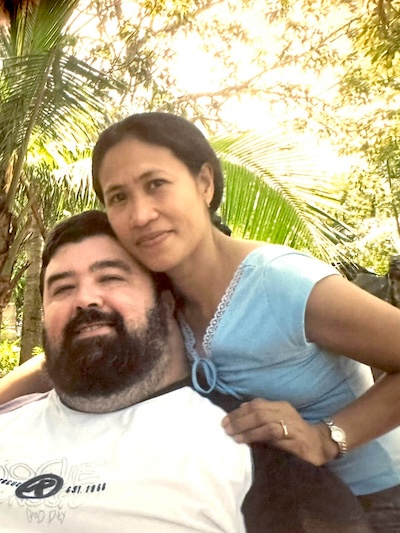
That resolve brought me to a quiet listing on a humble website. Her name was Mila. She was working overseas in Hong Kong, and she had a young daughter waiting for her back home in the province.
Part III: Letters, Long Distance, and a Crazy Move
We began with letters. Then came early emails, and soon after, long-distance telephone calls that stretched across international borders, listening to the crackle of undersea cables while the telephone bills mounted into eye-watering sums.
From the very first exchange, Mila was different. There was no pretense, no flattery, and no calculated playing of roles. She had a quiet intelligence, a razor-sharp moral compass, and an unshakeable devotion to her family. Long before we ever stood in the same room, breathed the same air, or shared a cup of tea, I found myself thoroughly and hopelessly in love with her mind and her spirit.
My theme song for our courtship has always been Elvis Presley’s Can’t Help Falling in Love:
“Wise men say only fools rush in / But I can’t help falling in love with you…”
I am an educated man, trained in empirical observation, agricultural science, and rational deduction. Yet right there, leaning over a landline telephone with an ocean separating us, I committed the most completely irrational, illogical, and glorious act of my life: I asked Mila to marry me before we had ever laid eyes on each other in the flesh.
And she, displaying either tremendous courage or temporary madness, said yes.
It remains the finest, most consequential decision I have ever made. Thirty years later, the sheer rightness of it still outshines every ounce of conventional logic.
Part IV: Mila’s Foundation: No Princesses in a Nipa Hut
I cannot write Mila’s autobiography for her, and out of respect for her privacy and dignity, I would never presume to. But without any bola-bola, which is the local term for bullshit, Down Under Visa would not exist, our home would not exist, and I would be half the man I am today without her standing shoulder-to-shoulder with me.
She was born six years after me, out in the lush, typhoon-swept countryside of Iriga in the Bicol region. Her heritage is one of sheer, unadulterated survival. Her parents were born into brutal rural poverty and never had the luxury of setting foot in a high school classroom. Her father became the primary breadwinner for his mother and siblings at eleven years of age when his own father passed away. Her mother began working at roughly the same age, having lost her own mother during a Japanese bombing raid during the war.
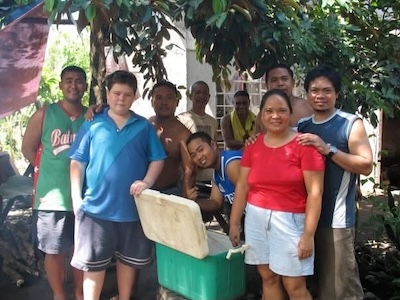
Despite those unimaginable odds, those two remarkable parents raised, fed, and educated nine children.
Mila entered this world inside a traditional nipa hut made of bamboo and palm thatch. She grew up in hand-me-down shoes that “smiled”, where the soles were peeling so far back from the toes that they flapped with every step. At seven years of age, while suburban kids in Western nations were complaining about what cartoon was playing on the telly, little Mila was walking the dirt roads of Iriga carrying trays of home-cooked delicacies her mother had prepared, selling them to neighbours to ensure there was rice on the table that evening.
As a schoolgirl, she took in laundry from neighbours, scrubbing heavy cotton trousers and shirts by hand until her knuckles were raw, and then stayed up deep into the night studying her schoolbooks under the smoky, flickering yellow light of a homemade kerosene lamp.
Through sheer intellect and relentless discipline, she pushed herself all the way through university, graduating with a Bachelor’s Degree in Education.
When you share a single small room with eight brothers and sisters on a bamboo floor, you do not cultivate a delicate ego. There are no spoiled princesses raised in a nipa hut. This became the foundation of the advice I have dispensed to Australian men for decades: Marry a worker, never a princess. A woman who has known real hardship understands the weight of loyalty, the value of a dollar, and the practical teamwork required to keep a household steady when times turn rough.
Finding teaching jobs scarce and poorly paid in her home province, and carrying the responsibility of a single mother who refused to let her daughter grow up in the same crushing poverty she had survived, Mila went abroad. She did what millions of heroic Filipino overseas workers do: she put her degree in a drawer and took humble employment as a domestic helper, first in Taiwan and then in Hong Kong.
She scrubbed foreign floors, took care of other people’s children, ate modest rations, and sent every single spare Hong Kong Dollar back home to her family. With that sweat and sacrifice, she fulfilled every child's dream: she paid for the materials and labor to build her parents a secure, permanent concrete home in Bicol.
And then, across a crackling phone line, she met an Australian consultant who proposed to her before he even shook her hand (or did what I wanted to do).
Part V: The 2003 Visa Calamity and Divine Mercy
In 2003, we took our first real step toward building a shared life by applying for a Subclass 300 Prospective Marriage Visa. In those days, the process bore little resemblance to the slick online portals of today. It was an era of physical paper files, Manila folders, carbon paper, and face-to-face counter interviews at Australian Embassies and Consulates. Plus a lot more patience and forgiveness than the Department shows applicants now!
Mila’s application was lodged over the counter at the Australian Consulate in Hong Kong.
Now, I must make a confession here that I share with every prospective client: I was not a Registered Migration Agent then. In fact, I was just a confident, reasonably educated Australian man who looked at the government forms, scoffed at the idea of hiring professional help, and declared, “I’m an agricultural consultant. I write technical reports for a living. How hard could a visa application possibly be?”
The answer is: it was nearly fatal to our dreams.
I put together an absolute shambles of a file. My supporting statements were disorganised, rambling, and emotional. Mila’s submissions, true to her nature, were neat and meticulous, but mine were a structural disaster. We had minimal financial evidence, fragmented records of our communication, and little understanding of what the migration regulations actually required an applicant to prove. We had our photos and our boarding passes, but our legal scaffolding was practically nonexistent.
What followed was an agonizing ordeal of Section 56 Requests for Information (RFIs). The Department started firing questions at us, demanding clarity on matters we had failed to document properly. Today, if an applicant lodged a file that sloppy, the Department of Home Affairs would refuse it outright without a second thought. The laws are stricter, the automation is ruthless, and the case officers do not possess the discretion or the time to untangle an applicant’s amateur mistakes.
Immigration departments don’t issue visas based on how deeply you love each other. They deal strictly in paperwork, evidence, and cross-examinations. If you make one careless mistake, your life gets put on hold indefinitely.
God was looking out for us that year. It was also a different era in the public service: you could actually pick up the telephone or exchange direct emails with an individual case officer whose name you knew. The case officer in Hong Kong was patient enough to let us scramble, patch the holes, and assemble the puzzle pieces.
Five or six agonizing months later, the visa was granted.
Even then, the drama was not finished. When Mila arrived at the Hong Kong airport to board her flight to Australia, she was pulled aside by immigration officials. I had not prepared her for the interview at the boarding gate. She didn’t know what paperwork she should keep in her carry-on, she didn’t know the standard questions, and she was nearly turned away in tears. Through sheer composure, she persuaded them to let her board the plane.
In November 2003, I stood in the international arrivals hall at Brisbane Airport, watching the doors slide open. There she was.
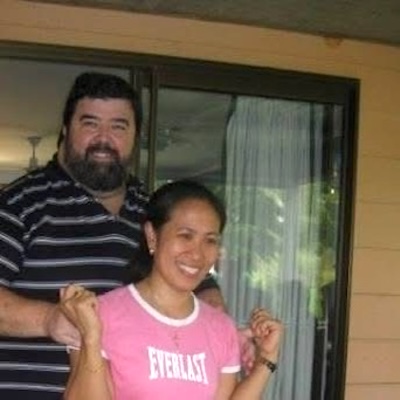
I loaded her bags into the car and drove her north to Rockhampton, where my two sons were waiting. Older clients will remember our former office manager, Jeremy; he was an energetic eleven-year-old lad back then, staring wide-eyed at the woman who was about to transform our lives. Mostly looking forward to better food, I seem to remember!
Part VI: Building a Life, Raising Remy, and the Valentine's Day Fluke
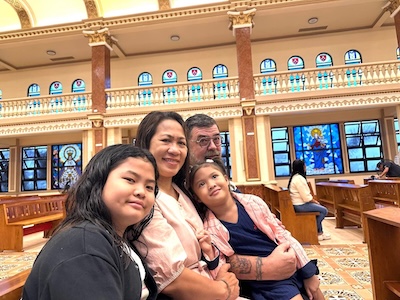
On the 14th of February, 2004, Mila and I were married inside the stone walls of St Joseph’s Cathedral in Rockhampton.
Over the years, people have remarked, “Oh, Jeff, how wonderfully romantic of you to choose Valentine’s Day for your wedding!”
I usually let out a chuckle and set the record straight. Being a plain-speaking, practical Aussie country fellow, I had no earthly idea that Valentine’s Day was on the 14th of February. It happened to be the Saturday the cathedral had an open slot in the parish registry. It was a complete and utter fluke of scheduling. But like many happy accidents in my life, I took full credit for it after the fact, and it has saved me from ever forgetting our anniversary for over two decades.
After the wedding came the real, quiet work of building a home. Every cross-cultural marriage undergoes an initial period of cultural friction and adjustment. Australian directness can sound blunt to Filipino ears, while the gentle, non-confrontational nuances of Filipino communication can leave an Australian scratching his head in bewilderment. We had our moments of adjustment, but we anchored ourselves in absolute loyalty, endless patience, and good humor.
We lodged our Subclass 820 Onshore Partner Visa before her nine-month prospective marriage visa expired. Once that was granted, our primary mission was to bring Mila’s daughter, Remy, to Australia on a Subclass 445 Dependent Child Visa.
In late 2006, we flew over, collected Remy, and brought her on her very first plane flight down to Queensland. She was nine years old, fiercely intelligent, deeply observant, and extraordinarily precocious. I will never forget walking through the airport terminal with this tiny girl who, having never seen women of Western proportions in the mountains of Bicol, began offering loud, unvarnished running commentary in the arrival hall about the physical girth of the travelers walking past us. I had to gently steer her by the shoulders and remind her that we use our indoor voices in Australia!
Filipino mothers often worry terribly about moving their children to Australia because of the misalignment of the academic school years. In the Philippines, the school year traditionally ran on a completely different rhythm, and mothers fear their children will be demoted or left behind academically.
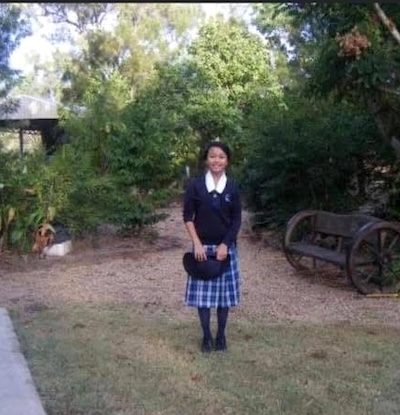
When we brought Remy to the local primary school in Rockhampton, it was late in the year. We sat down with the school principal and explained: “Look, the long six-week Christmas holidays are coming up. We think it’s best if we wait and enroll her fresh at the start of the new school year in January.”
The principal leaned forward and said: “Absolutely not. If she sits at home for six weeks thinking about starting a foreign school, she will drive herself mad with anxiety. She starts tomorrow morning.”
She marched us straight down to the uniform shop, sorted out her blue polo shirt and "skorts, and sent us on our way.
The next morning, Mila and I drove up to the school gates with butterflies in our stomachs. Standing right by the fence were four beaming and excited young Aussie girls. The moment our car door opened, those four girls swooped in, took Remy by the hand, introduced themselves, and led her straight across the playground to join their circle. Mila and I looked at each other, let out a massive sigh of relief, got back in the car, and drove home. That is the Australia I love, the unpretentious country where a newcomer is greeted with a warm hand and brought straight into the game.
Part VII: The Internet Forum, the Calling, and Becoming RMA 0959797
While our home life was finding its rhythm, my professional life was running on fumes. I was spending long hours behind the windshield, covering hundreds of kilometers between farms, wrestling with agricultural supply chains, and mediating disputes between stressed-out growers. The fire had gone out of it.
At the same time, I had set up an online discussion forum for men who were in relationships with Filipina women. It was an international gathering: Australians, Englishmen, Americans, Kiwis, and a sprinkling of Europeans.
I quickly found that I had a natural gift for mediating their concerns. This was well before the modern era where every keyboard warrior claims to be a constitutional lawyer, relationship guru, and immigration specialist rolled into one. I didn't dispense formal visa advice because I had enough humility to recognize my legal limitations; I remembered our own chaotic application far too clearly.
Instead, I focused on relationships. I talked to these men about expectations, respect, cross-cultural understanding, and avoiding the traps of arrogance and impatience. I helped them understand the minds of their partners, and I helped the ladies understand why Australian men can be direct and stubborn.
Then came the second lightning bolt of my life.
I discovered the profession of the Registered Migration Agent. It was a regulated, legally accountable field governed by strict statutory standards, requiring rigorous legal education, thorough background vetting, and deep knowledge of the Migration Act 1958 and the Migration Regulations 1994.
I looked at my computer screen, looked back on everything we had survived, and thought: This is what I was meant to do.
I knew precisely what it felt like to be a naive Australian man, sitting in an armchair late at night, terrified that a simple paperwork mistake would tear his future apart. When you fall in love with a woman from across the globe, you realize how fragile your happiness is. A single anonymous public servant, sitting behind a desk in an air-conditioned office thousands of kilometers away, possesses the administrative power to stamp "REFUSED" on a piece of paper and extinguish your family’s dreams forever.
Down Under Visa was never built to be a faceless corporate agency. It was built to be a sanctuary—run by an Aussie bloke and a Filipina lady who survived the system and decided no other couple should have to face it alone.
I wanted to stand between those couples and that bureaucratic machinery.
I have always believed in the profound, transformative power of marriage. When you look at an unattached man in his middle years, you often see a creature drifting. He has no domestic anchor. But when that same man finds a loyal, hardworking woman, marries her, and builds a home, everything changes. His shoulders square up. He puts on ten kilos of good home-cooked weight. His wardrobe improves. He stops wasting his weekends on nonsense. And when children run into the room, he suddenly finds a deep, immovable purpose that no paycheck or promotion can ever provide.
I wanted to be the catalyst for that transformation. I didn't want to shuffle papers for multi-million-dollar corporations seeking short-term labor. I wanted to build families.
I hit the law books with ferocious intensity, passed my qualifications, and in 2009, I received my official registration as a Registered Migration Agent (MARN 0959797). I had already written and designed the original Down Under Visa website in secret. The very hour my MARA confirmation landed in my inbox, I hit the button marked PUBLISH.
We were in business from that very moment.
Part VIII: Moving to the Frontlines: Manila, Dasmariñas, and Silang
Most Australian migration agents set up an office in Sydney, Melbourne, or Brisbane, sit in a high-rise office behind a glass desk, and handle files from a distance.
I told Mila: “We can’t do that. We have to pack up the household and move to the Philippines.”
It was the only logical strategy. Our visa applicants were in the Philippines. The Australian sponsors were traveling back and forth through Ninoy Aquino International Airport in Manila. If an Australian man was flying across the world to see his fiancée, he shouldn't have to wait until he returned home to speak with his agent; he should be able to sit across a desk from us, right where his fiancée lived.
More importantly, the applicants themselves, the Filipina women, were often terrified of the process. In those early years, partner visas were still lodged on paper. The Australian Embassy did not accept walk-ins; applications had to be compiled physically, bound into hefty envelopes, and hand-delivered weekly to commercial collection centers, first the old VIA Center, and later VFS Global.
Mila was essential to our survival. When couples came to our original office in Alabang, Muntinlupa, the ladies were often quiet, nervous, and overwhelmed by the legal terminology. Mila would pull her chair right up alongside them, speak to them in their native tongue, calm their anxieties, and explain the facts woman-to-woman.
She helped them understand why we needed original birth certificates from the National Statistics Office (now the PSA), why we needed baptismal records, and why every detail of their personal history had to be completely honest. Without Mila, some of those ladies would have shut down out of fear. With her, they felt protected.
From that first modest office in Alabang, we expanded. We moved to Dasmariñas in Cavite to establish larger facilities, twice outgrowing our spaces as word of mouth spread across the Australian-Filipino community. Eventually, we established our permanent headquarters in Silang, Cavite, up in the clean, breezy highlands, away from the choking traffic of the metropolis, where our staff and family could breathe clear air.
Today, Down Under Visa employs a dedicated staff of ten clerks, document managers, and administrative specialists. And who sits at the helm as our Office Manager? That very same outspoken, precocious nine-year-old girl, Remy, who arrived in Rockhampton all those years ago. She is now twenty-nine years old, a brilliant, formidable manager, and the mother of our two gorgeous grandchildren. The little girl who crossed the ocean on a Subclass 445 visa now oversees the preparation of hundreds of partner and family visas for other Australian-Filipina couples.
The circle could not be more complete.
Part IX: The Modern Era: Online Lodgements, Zoom, and the Tribe
The world has evolved dramatically since 2009. The mountain of paper files, the heavy manila folders, and the weekly drives through Manila traffic to drop off physical parcels at VFS are relics of the past.
Everything is digital now. Partner visas, Prospective Marriage visas, Tourist visas, and Child visas are processed through sophisticated, encrypted government portals. The days of hand-signed physical declarations have yielded to secure digital uploads, scanned identity documents, and biometric verifications.
When the global pandemic arrived, it transformed human communication. In-person office appointments absolutely disappeared, replaced by face-to-face video consultations via Zoom. Even with borders fully reopened, our clients discovered they preferred it that way. An Australian sponsor sitting in his living room in Perth, Townsville, or out on a mine site in the Pilbara can now jump on a screen with his fiancée in Cebu, Davao, or Manila, and consult with Mila and me in real time. We review their evidence, walk them through the migration regulations, and answer their questions without anyone having to navigate international terminals or sit in city traffic.
Meanwhile, our personal home remains as delightfully chaotic as ever. While running a demanding migration agency, Mila, with that boundless provincial work ethic she forged as a seven-year-old girl in Iriga, runs our bustling household. Over the decades, our doors have been open to family, relatives, and children who needed an education, a safe roof, and a loving hand. We currently have five young people under our roof, as the older ones have grown up, completed (or completing) university, married, and moved out to build their own lives.
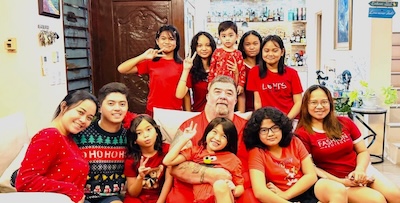
I often look around our dinner table at the sea of smiling faces, listening to the rapid chatter of English and Tagalog, and think about the bizarre, improbable path that led me here.
What if my first marriage hadn't fallen apart all those years ago? What if I hadn't seen that suburban house in Queensland and wondered about my mate's happy home? What if I had listened to the cynics who told me that looking for a wife in the Philippines was foolish? What if I had quit after my first series of disastrous trips to Manila and Cebu? What if I had married someone other than this steadfast, hardworking Bicolana woman?
I would have stayed an agricultural consultant. I would have spent my life arguing about tomato pests and fertilizer drift. I would have lived a smaller, quieter, far less fulfilling life.
I have three true callings in this world:
-
To be an unshakeable, loving husband to a magnificent woman.
-
To be an active, protective father and grandfather to a big, beautiful tribe of children.
-
To take good, decent Australian men and warm, loving Filipina women, unite them through the complex web of immigration law, and give them the same happiness, stability, and domestic peace that Mila and I have built together.
Part X: Why We Do What We Do
You will never see Down Under Visa advertising for corporate business sponsorships, 482 temporary skill shortage visas, or student visa packages.
I have zero professional or even personal interest in them. Helping an overseas national navigate a complicated visa route simply to achieve economic convenience does not get me out of bed in the morning. I am entirely unmoved by corporate immigration.
What moves me, what stirs my blood and makes our entire team work late into the night double-checking statutory declarations, relationship chronologies, and character clearances, is the sacred bond between a man and a woman who love each other.
I know what is at stake for our clients.
I know the sheer terror an Australian sponsor feels when he looks at his bank account, calculates how many weeks of annual leave he has left, and realizes that every day spent apart from his partner is a day stolen from their future. I know the gut-wrenching anxiety that seizes a Filipina lady when she hears rumors that her visa might be rejected because of an innocent paperwork error. And I know the crushing weight of receiving a Section 56 Request for Information or a Section 57 Natural Justice letter from the Department, warning that your application is on the brink of being refused.
We have lived through that nightmare. I made those mistakes myself back in 2003, and I carry the memory of that fear every time I review a client’s file.
If you feel that knot in your stomach right now wondering how you're going to bring your partner home to Australia, take heart: you are walking a path we have already beaten through the bush.
When you engage Down Under Visa, you are not handing your future over to a junior clerk in a sterile corporate office who views your romance as file number 482 on a spreadsheet. You are placing your dreams into the hands of an Australian man and a Filipina woman who have walked every single inch of this road before you.
We know the culture. We know the paperwork. We know the migration law inside and out. And above all, we know how much this means to you.
We have seen lonely, tired Australian men, scruffy, worn out by life, and unsure of their future, marry wonderful Filipina ladies and become completely renewed. We have watched those same men become joyful fathers, stepping up to the responsibility with broad grins, standing beside women who respect, honor, and cherish them. And we have watched hardworking, dignified Filipina women step off airplanes into clean Australian suburbs, build prosperous lives, and give their children opportunities their own parents could only dream of from inside a nipa hut.
I have lost count of how many thousands of couples we have brought together over the last two decades. I have lost count of how many babies have come into this world because their parents' partner visas were approved under our watch. Being a small, vital cog in the machinery that brings real families into existence is the greatest professional honour a man could ever ask for.
We believe in marriage. We believe in family. We believe in the wonderful, enduring bond between Australia and the Philippines.
And most of all, Mila and I believe in you.
We are not going anywhere. As long as there is an Australian man who has lost his heart to a good Filipina woman, Down Under Visa will be right here on the frontlines, standing between you and the bureaucracy, clearing the path, and bringing you home where you belong.

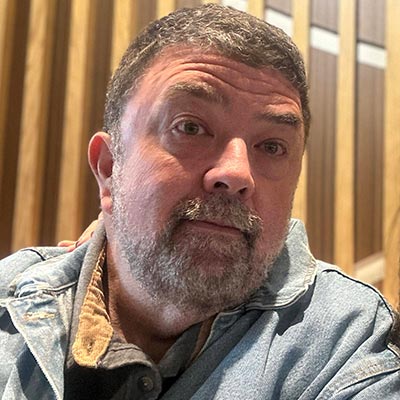
We walked this track ourselves when dial-up modems were brand new, and we’ve guided thousands of Australian-Filipina couples down it since. You don’t have to battle the paperwork, the confusing forms, or the fear of a sudden refusal all on your own.
Talk to an Aussie bloke and a Filipina team who understand both the legal minefield and the emotional weight of waiting for an answer.
Start Your Free Visa Assessment →
Prefer a quick question first? Chat with us on WhatsApp